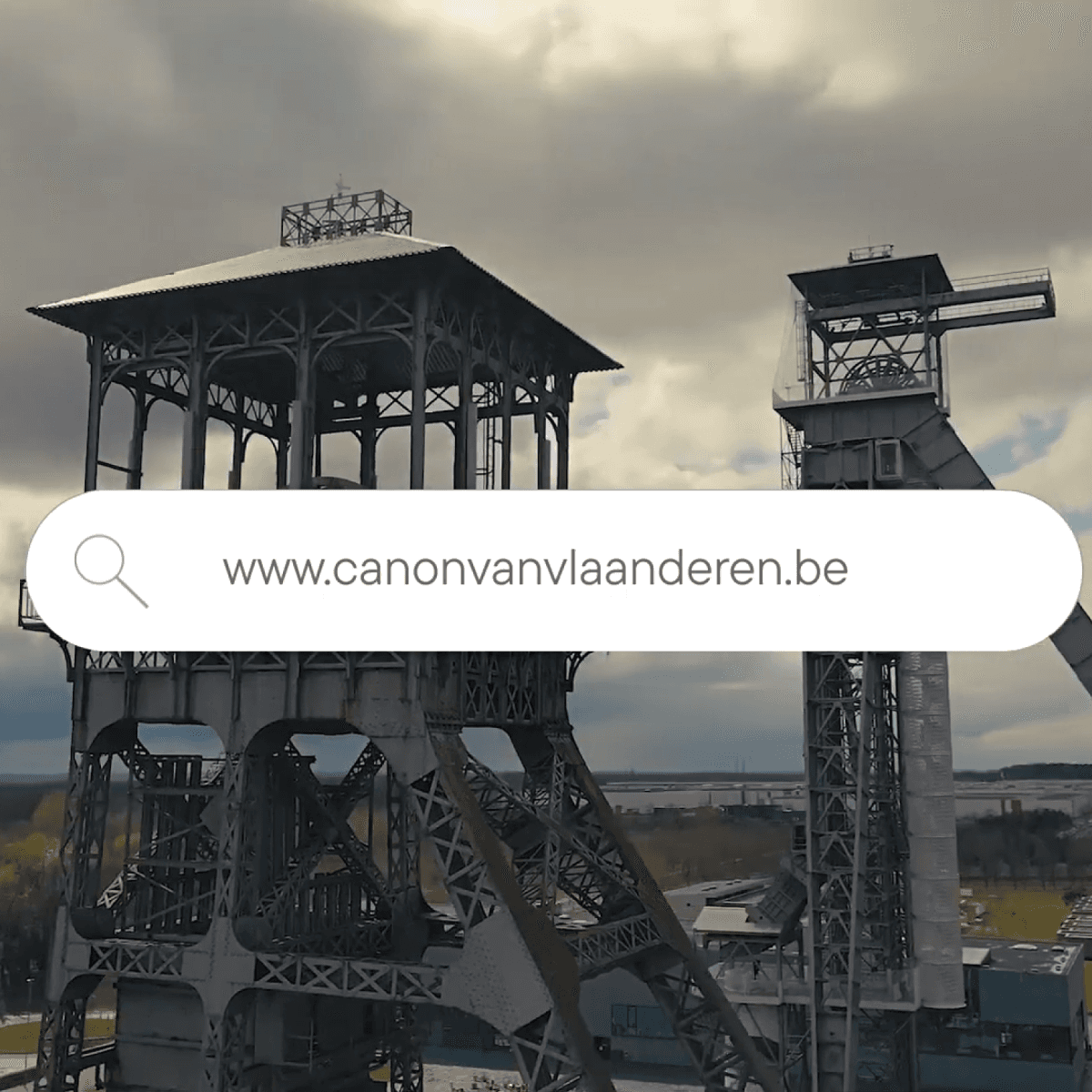
Flemish history was rich, layered and complex — yet for many people, difficult to access. The Flemish government was looking for a way not only to preserve cultural heritage, but to actively share it with citizens, students and newcomers. Together, we developed an interactive cultural heritage platform that makes history understandable, engaging and relevant in the digital age.
Public knowledge unlocked through a single digital experience
Interaction as the key to engagement and understanding
Designed for education, citizens and society
Accessible and scalable for the long term
A digital platform with clear societal value

The challenge
How do you make 133,000 years of Flemish history understandable, engaging and relevant for a contemporary and diverse audience?
The solution
An interactive cultural heritage platform that allows people to explore history through stories, timelines and maps — built around accessibility and engagement.
Flemish government x iO: making heritage accessible to all
The Canon of Flanders is an initiative by the Flemish government, created to bring together the most important people, events and developments in Flemish history within a shared reference framework for education, culture and society.
iO acts as a trusted digital partner in translating this rich content into an accessible, interactive platform. Our collaboration went beyond execution alone: together we explored how history can be experienced digitally, and how a public platform can convey trust, clarity and curiosity. This case highlights one key outcome of that partnership — and forms part of a broader digital mission.
Why cultural history needed a digital stage
History truly comes to life when it resonates with people. The Canon of Flanders wanted to be more than an archive or reference work: it aimed to invite discovery. That required a platform designed not around structure, but around experience and meaning for the visitor.
Interaction as the engine for understanding and engagement
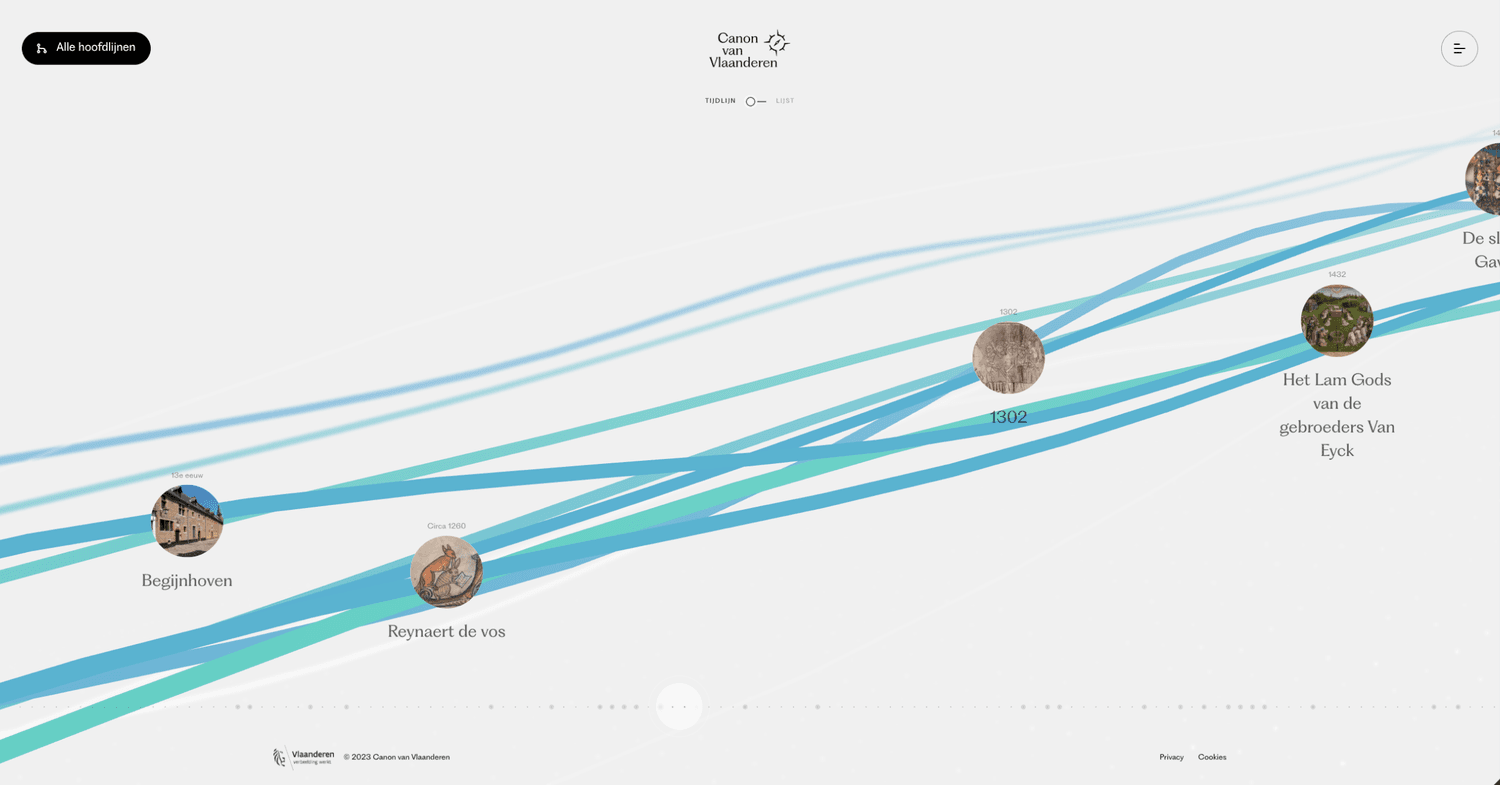
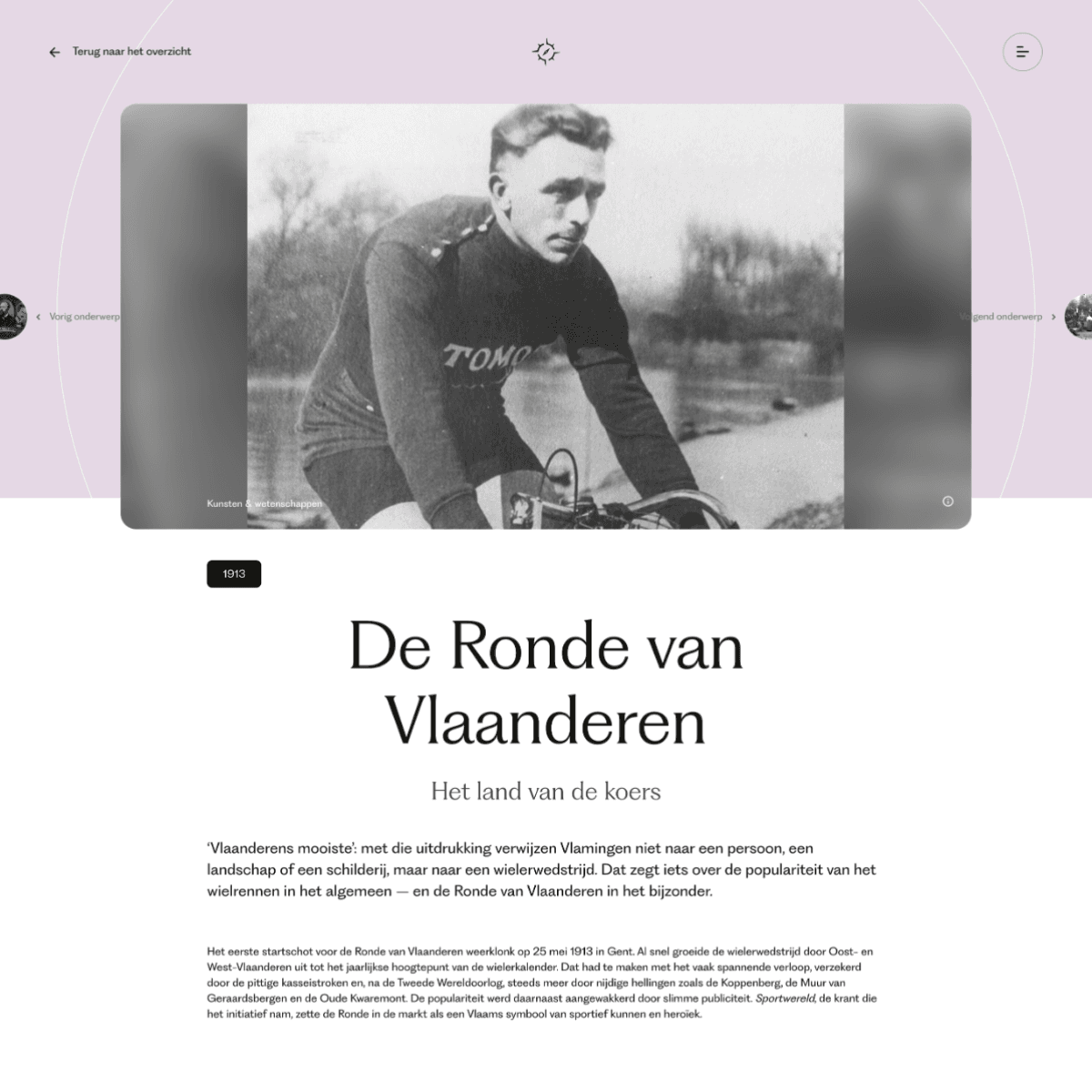
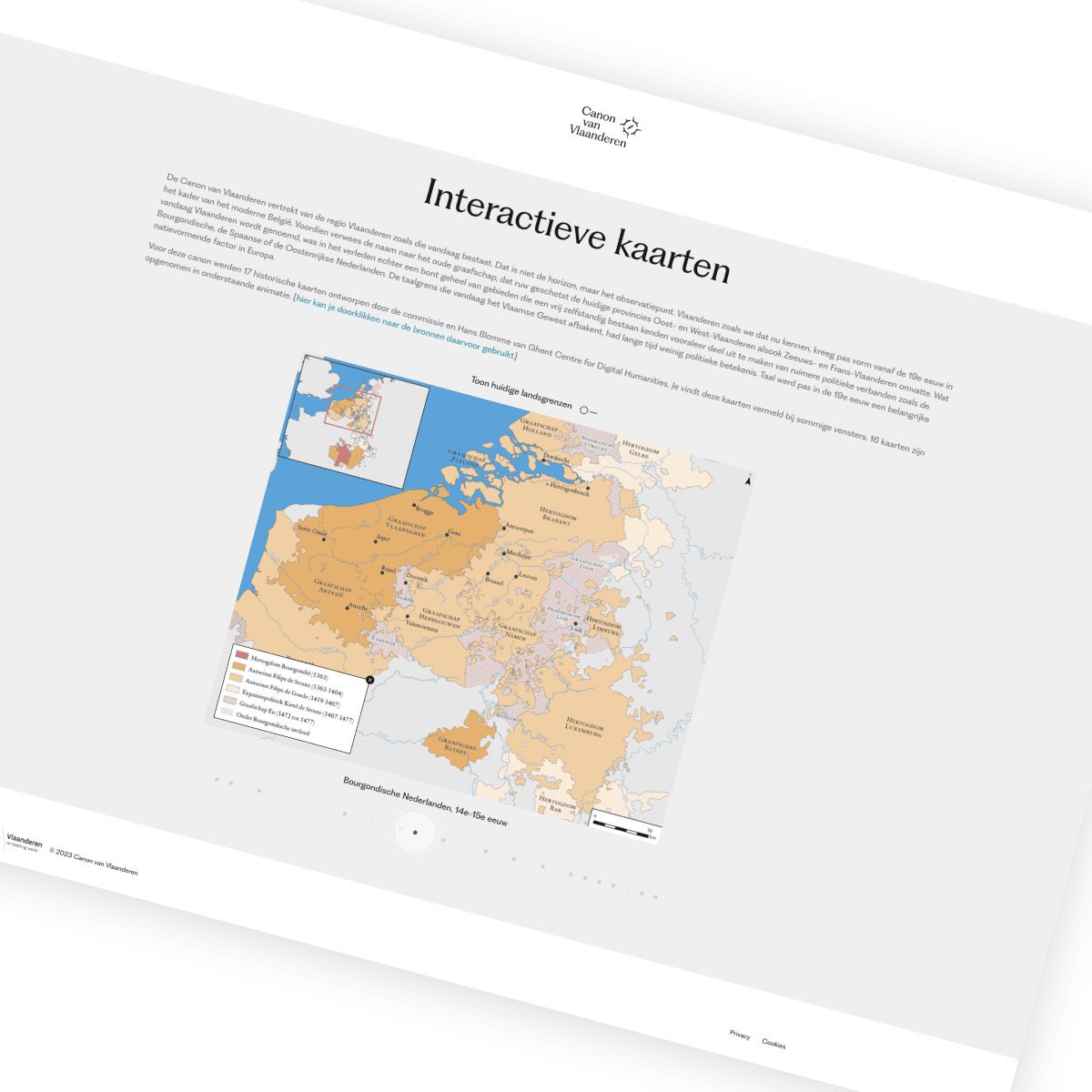
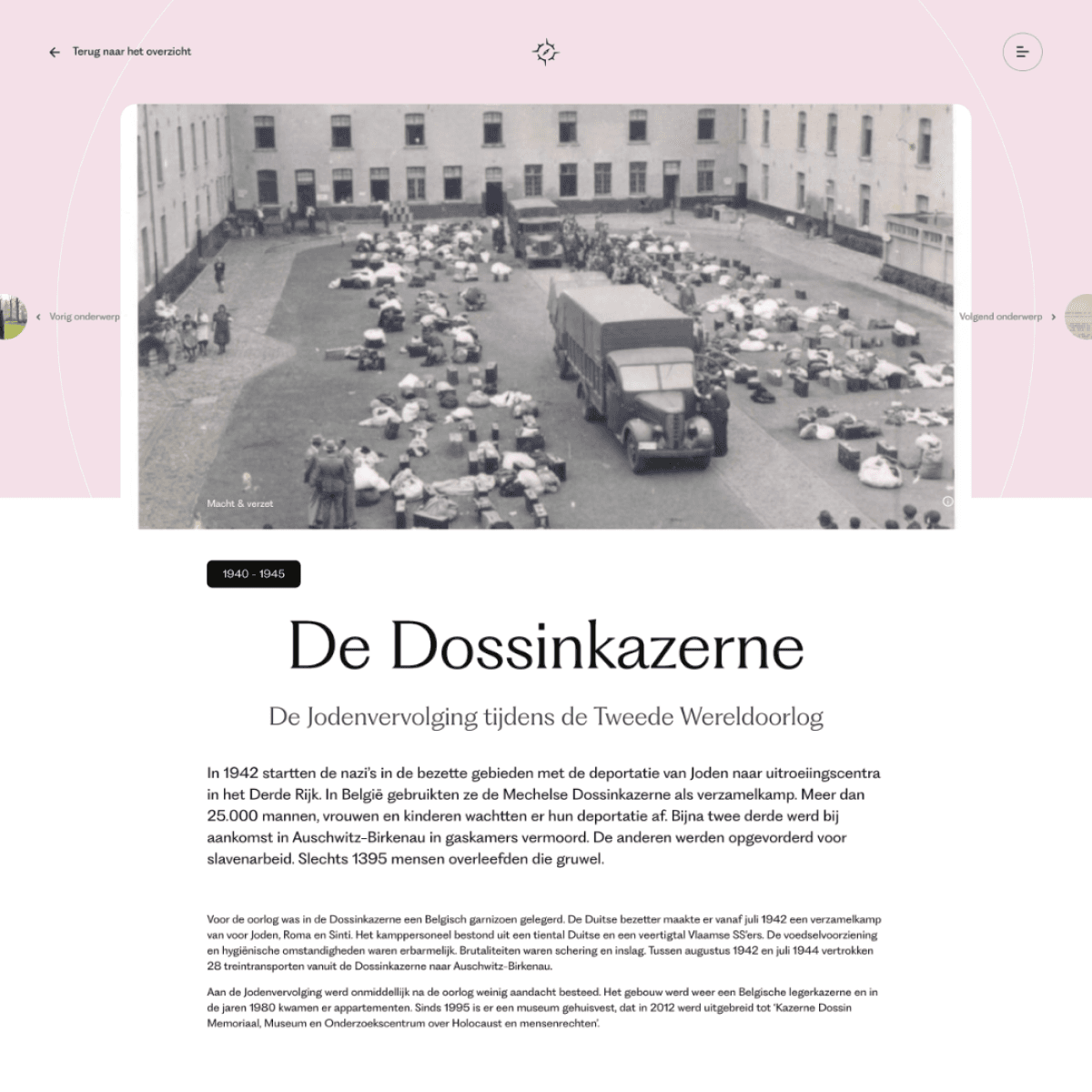
That is why we chose an interactive cultural heritage platform where stories take the lead. Sixty historical windows, each with its own context, are connected through dynamic timelines and interactive maps. Visitors follow their own path through history — playfully exploring or diving deeper, depending on their interests.
One platform for citizens, education and policy
The platform is designed for a wide range of audiences: curious citizens, teachers in the classroom, students and newcomers. By combining different reading levels and navigation structures, the content remains accessible without sacrificing depth.
Digital technology in service of societal impact
Technology supports the story, but never takes centre stage. The result is a scalable, futureproof platform that evolves along with new insights, additions and societal context.
The numbers
1
visitors in the first week
1%
engagement rate
1
historical windows
Cultural heritage you can truly experience
The interactive cultural heritage platform of the Canon of Flanders makes history tangible in everyday life. For the Flemish government, it provides a sustainable digital reference framework. For education and society, it offers an open window onto shared history and identity. And for visitors, it delivers an experience that invites exploration, builds understanding and leaves a lasting impression.