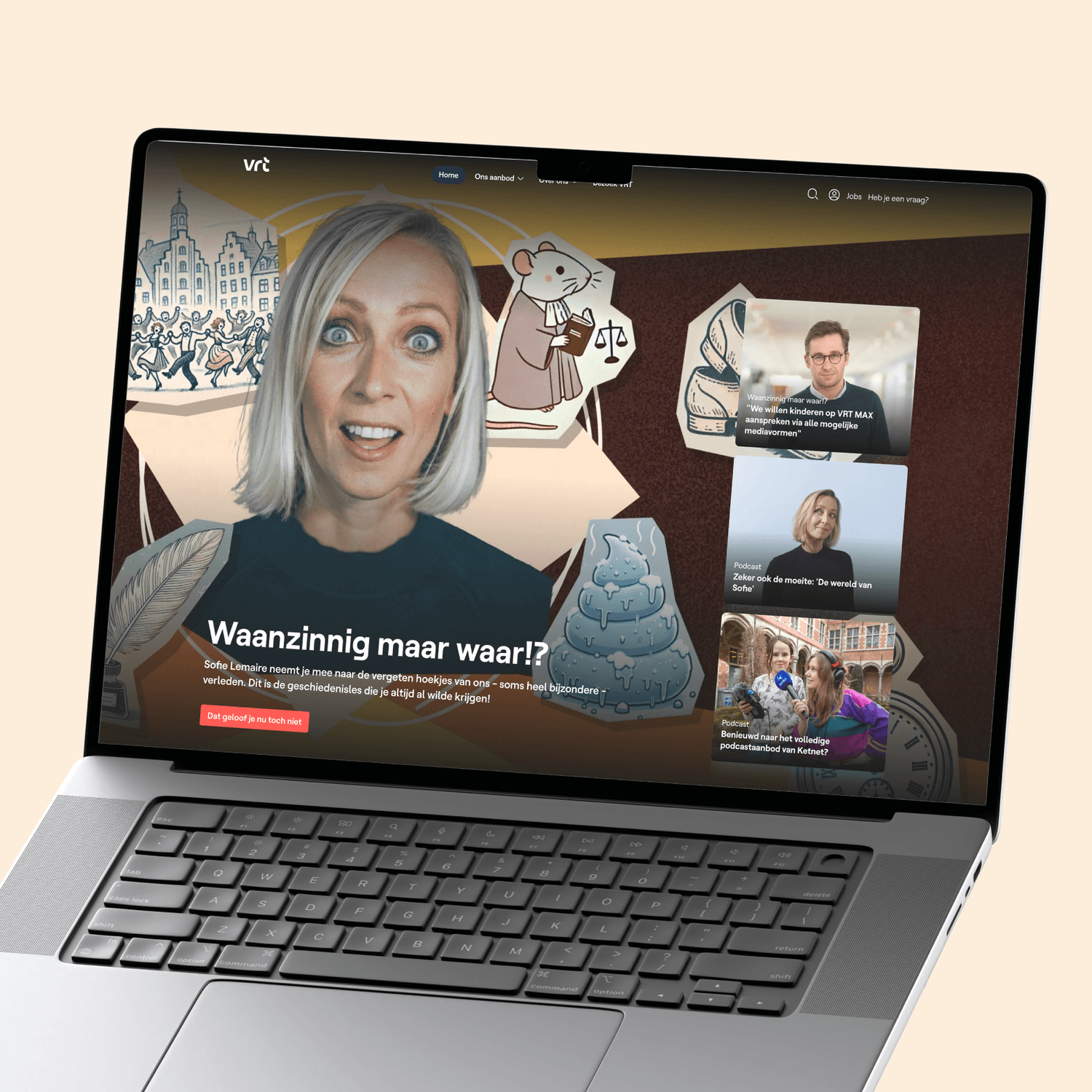
Public broadcasters face a unique challenge: keeping pace with rapid digital change while serving millions of diverse viewers. For VRT, Belgium's leading public broadcaster, this meant transforming an ageing website into a dynamic, user-centred portal. The solution? A headless CMS architecture built on Drupal 10 and React that seamlessly integrates with VRT's existing internal systems. Together, we delivered a future-ready platform in just four months, laying the foundation for a lasting technology partnership.
Headless Drupal 10 with React frontend for maximum flexibility
Seamless API integration with VRT's existing digital ecosystem
Four-month delivery from kick-off to launch
Long-term partnership with ongoing support and optimisation
Built-in SEO tools and centralised media management
Scalable architecture designed for public sector requirements
The challenge
How do you unlock the full potential of an ageing platform while integrating seamlessly with a complex existing digital ecosystem?
The solution
A headless CMS implementation using Drupal 10 and React that connects effortlessly with VRT's internal APIs, delivering a modern user experience and giving internal teams the technical relief they need to focus on content.
VRT x iO: building the digital future of public broadcasting
VRT (Vlaamse Radio- en Televisieomroeporganisatie) is Belgium's public broadcaster, reaching millions of Flemish viewers daily across television, radio, and digital channels. As a public service organisation, VRT faces constant pressure to innovate while maintaining accessibility for all audiences. Together we help build a digital experience to delight their audiences.
Why a headless CMS is the answer for complex media ecosystems
What are the advantages of a headless CMS for media companies? The answer lies in flexibility and integration. Traditional monolithic content management systems often create bottlenecks when organisations need to deliver content across multiple channels while maintaining connections with legacy systems.
For VRT, internal teams were focused on developing new platforms like VRT MAX, leaving the potential of vrt.be untapped. A headless architecture separates the content layer from the presentation layer, enabling VRT to manage content in Drupal while delivering it through a React frontend. This decoupled approach means faster performance, easier updates, and the freedom to evolve each layer independently.
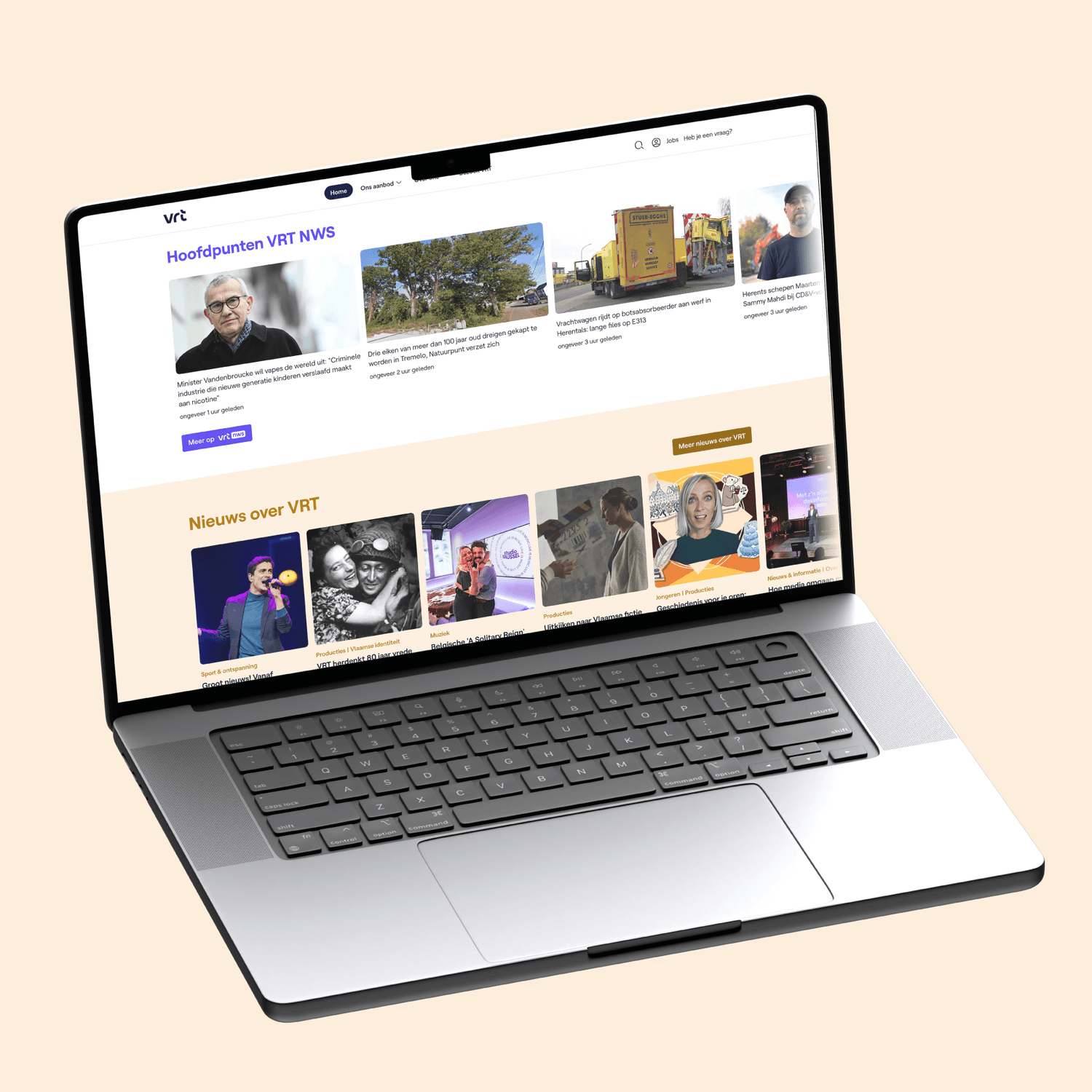
How do you integrate a headless CMS into an existing digital ecosystem?
Integration was the core challenge. VRT operates within a complex digital landscape with multiple internal APIs, content sources, and publishing workflows. Any new platform had to fit seamlessly into this ecosystem, not disrupt it.
We chose a tech stack that aligned perfectly with VRT's familiar systems. By using Drupal 10 as the headless backend and React for the frontend, we ensured consistency across VRT's digital portfolio. The React frontend integrates directly with VRT's internal APIs, pulling in content from various sources to create a unified, dynamic user experience. This approach enabled smooth collaboration between our teams and VRT's internal developers, with shared knowledge and aligned tooling.
Can you use React with Drupal? The technical architecture explained
Yes, and this combination offers significant advantages for media organisations. Drupal 10 functions as a headless CMS, exposing content through flexible API endpoints. React consumes these APIs to render a fast, interactive frontend. This architecture delivers:
Decoupled flexibility: content editors work in Drupal's familiar interface while developers build modern, performant frontends
API-first design: VRT's internal systems connect seamlessly through standardised endpoints
Low-code options and visual editing: editorial teams gain efficiency without technical dependencies
Scalable infrastructure: the platform handles traffic spikes during major news events or programme launches
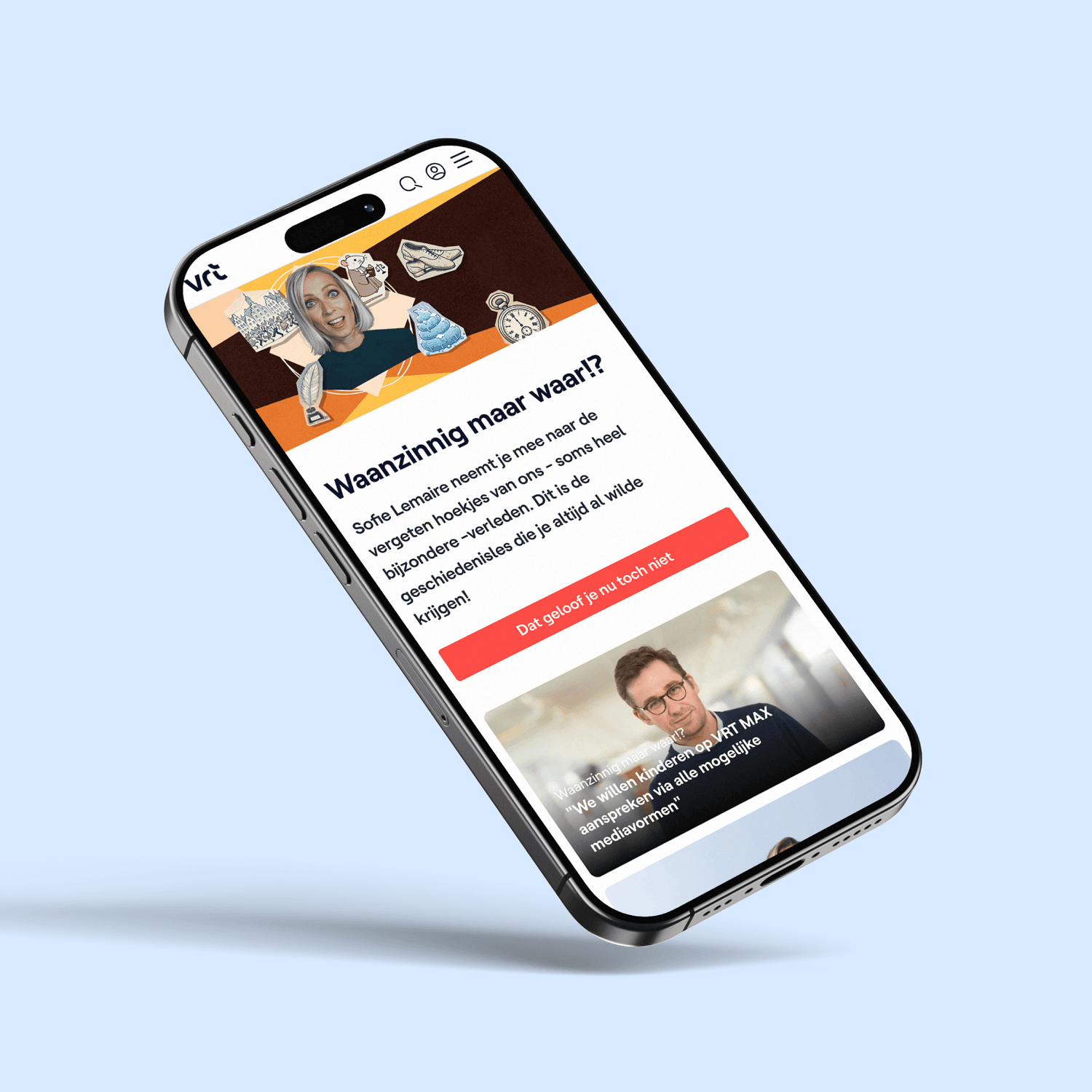
Is Drupal suitable as a headless CMS for the public sector?
Drupal has become a leading choice for public sector organisations requiring robust, secure, and cost-effective digital platforms. As open-source software, it offers transparency, community-driven security updates, and freedom from vendor lock-in.
For VRT, Drupal's enterprise-grade capabilities proved essential:
Built-in SEO tools maximise visibility for public service content
Centralised media management streamlines workflows for large editorial teams
Extensive revision and publishing controls ensure editorial governance
GDPR-compliant architecture meets public sector requirements
Strong content structures support complex multilingual and multi-channel publishing
How long does a headless CMS implementation take?
How long does a headless CMS implementation take? For VRT, the answer was four months from project kick-off to launch. This timeline was possible because of several factors: clear requirements, aligned technology choices, experienced teams on both sides, and an agile methodology with bi-weekly sprints and weekly check-ins.
A hybrid collaboration model combined on-site presence with remote work, enabling rapid iteration and close alignment with VRT's internal teams. The result: a fully functional platform delivered on schedule, with room for ongoing optimisation after launch.
From project to partnership: ongoing evolution
Digital platforms are never truly finished. VRT needed a partner who could not only deliver the initial build but also support continuous improvement. We established a framework agreement for long-term collaboration, giving VRT access to dedicated expertise for updates, upgrades, and new feature development.
This partnership model provides VRT with:
Safe, structured update and upgrade cycles
Proactive performance monitoring and optimisation
Strategic input on digital roadmap and technology choices
Rapid response capability for emerging requirements
The numbers
1
Months from kick-off to launch
1
Unified platform replacing fragmented systems
1%
API integration with VRT's existing ecosystem
A future-ready platform built for public service
The new vrt.be is more than a website refresh: it's a strategic digital asset designed for long-term evolution. By choosing headless Drupal with React, VRT gained a platform that integrates seamlessly with their existing systems while providing the flexibility to adapt as audience expectations and technology change.
For VRT's editorial teams, the platform delivers technical relief: less time managing infrastructure, more time creating content that serves the Flemish public. For end users, the experience is faster, more intuitive, and consistently on-brand across devices. And for VRT's technology leadership, the architecture provides a solid foundation for future innovation without the constraints of legacy systems.
The collaboration continues. With a long-term partnership in place, we're building on this foundation together, ensuring vrt.be remains a leading example of what headless CMS architecture can achieve in the public sector.