
Government organisations often manage dozens of websites: main sites, project portals, campaign pages, regional initiatives. Each with its own technical setup, its own maintenance burden, its own inconsistencies. Province of Utrecht wanted to break this pattern. They needed a platform where all websites share the same functionality and visual identity, where updates happen once and apply everywhere, and where launching a new subsite takes hours instead of months. We built a Drupal multisite architecture that delivers exactly that.
Drupal multisite architecture enabling government website consolidation under one codebase
New subsite deployment within one day with full functionality inherited automatically
Single sign-on integration giving authorised staff access to all websites and the media library
Integrated image bank eliminating manual image processing and metadata management
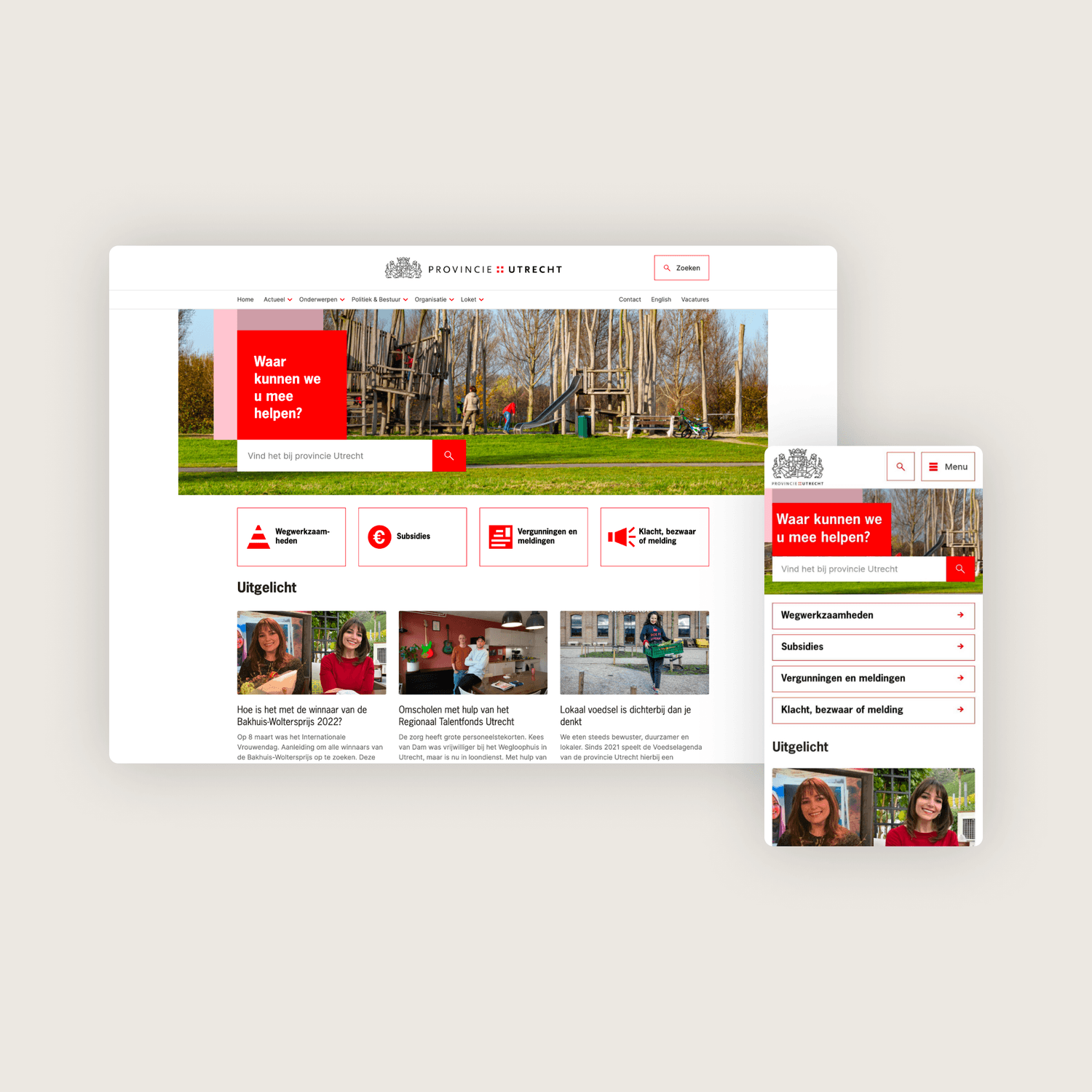
Consistent look and feel across all subsites while maintaining content independence

The challenge
How do you give multiple government websites the same functionality and look and feel while maintaining content separation and enabling rapid deployment of new subsites?
The solution
A Drupal multisite setup with a single codebase, integrated SSO, a shared image bank and an architecture that allows new subsites to be launched within one day.
Provincie Utrecht x iO: building a scalable digital foundation for public services
Province of Utrecht is the oldest and smallest province in the Netherlands. The province is committed to enhancing the attractiveness of the region and facilitating growth whilst maintaining quality of life. Their digital presence spans multiple websites serving different audiences: residents, businesses, policymakers and project stakeholders.
We partner with Province of Utrecht to ensure their digital infrastructure keeps pace with their ambitions. This case highlights how we helped them consolidate their web presence into a scalable, maintainable platform that puts both citizens and content teams first.
Why government organisations need a different approach to website management
Most organisations have one website. Government bodies have many: main portals, departmental sites, campaign pages, project microsites, regional initiatives. Each serves a different purpose, but all need to meet the same standards: accessibility, security, consistent branding and reliable service.
When these sites are built and maintained separately, problems multiply. Updates need to be applied multiple times. Inconsistencies creep in. New sites take months to launch. Content teams waste time navigating different systems. Province of Utrecht recognised this pattern and wanted a fundamentally different approach.
How to set up a Drupal multisite for government organisations
The answer was a multisite architecture with a single codebase. In this setup, all websites share the same underlying Drupal installation, the same modules, the same functionality. But each site has its own database, keeping content completely separate.
This architecture delivers the best of both worlds. Updates and optimisations are implemented once and apply to all sites immediately. New features become available everywhere at the same time. Security patches protect the entire portfolio in one deployment. Yet each site maintains its own content, its own editors and its own permissions structure.
For government organisations, this separation is critical. Different departments have different content governance requirements. Different projects have different stakeholders. The multisite architecture respects these boundaries while eliminating technical fragmentation.
How to deploy a new government subsite within one day using a shared codebase
One of the most powerful benefits of the single codebase approach is deployment speed. With traditional website development, launching a new site means months of design, development and testing. With the Province of Utrecht platform, we can deploy a new subsite with full functionality within one day.
The new site inherits everything: the CMS structure, the design system, the accessibility compliance, the search functionality, the image bank integration. Content teams can start adding content immediately. There is no development backlog, no waiting for resources, no compromises on functionality.
This speed transforms how the province can respond to new initiatives. A new regional project? A campaign that needs its own presence? A temporary portal for public consultation? All can be launched within a day, fully functional and fully consistent with the broader digital ecosystem.
How to integrate single sign-on and a media library in a Drupal multisite
Managing multiple websites means managing multiple sets of user accounts, permissions and content assets. For Province of Utrecht, we simplified this with two key integrations.
Single sign-on ensures that authorised employees have access to the CMS of all websites with one set of credentials. No separate logins, no password management headaches, no access requests for each individual site. Permissions are managed centrally, and staff can move between sites seamlessly.
The integrated image bank solves another common pain point. Previously, content editors had to search for images, crop them to size, compress them and upload them manually. Images were stored in different formats across separate systems. Metadata was inconsistent or missing.
Now, photographers upload images directly to a centralised image bank integrated into the platform. Drupal scales and compresses images automatically for optimal performance. Metadata is structured and searchable. Content editors across all subsites access the same library, ensuring visual consistency and eliminating duplicate work.
A platform built for accessibility and public sector standards
Government websites are not optional services. They provide essential information and access to public services. Accessibility is not a nice-to-have but a legal and ethical requirement.
The Drupal multisite architecture ensures that accessibility standards are built into the foundation, not bolted on as an afterthought. WCAG compliance is implemented once and inherited by all subsites. When accessibility requirements evolve, updates are deployed portfolio-wide. This systematic approach ensures Province of Utrecht meets its obligations to serve all residents, regardless of ability.
Visitor-centred design with advanced search functionality
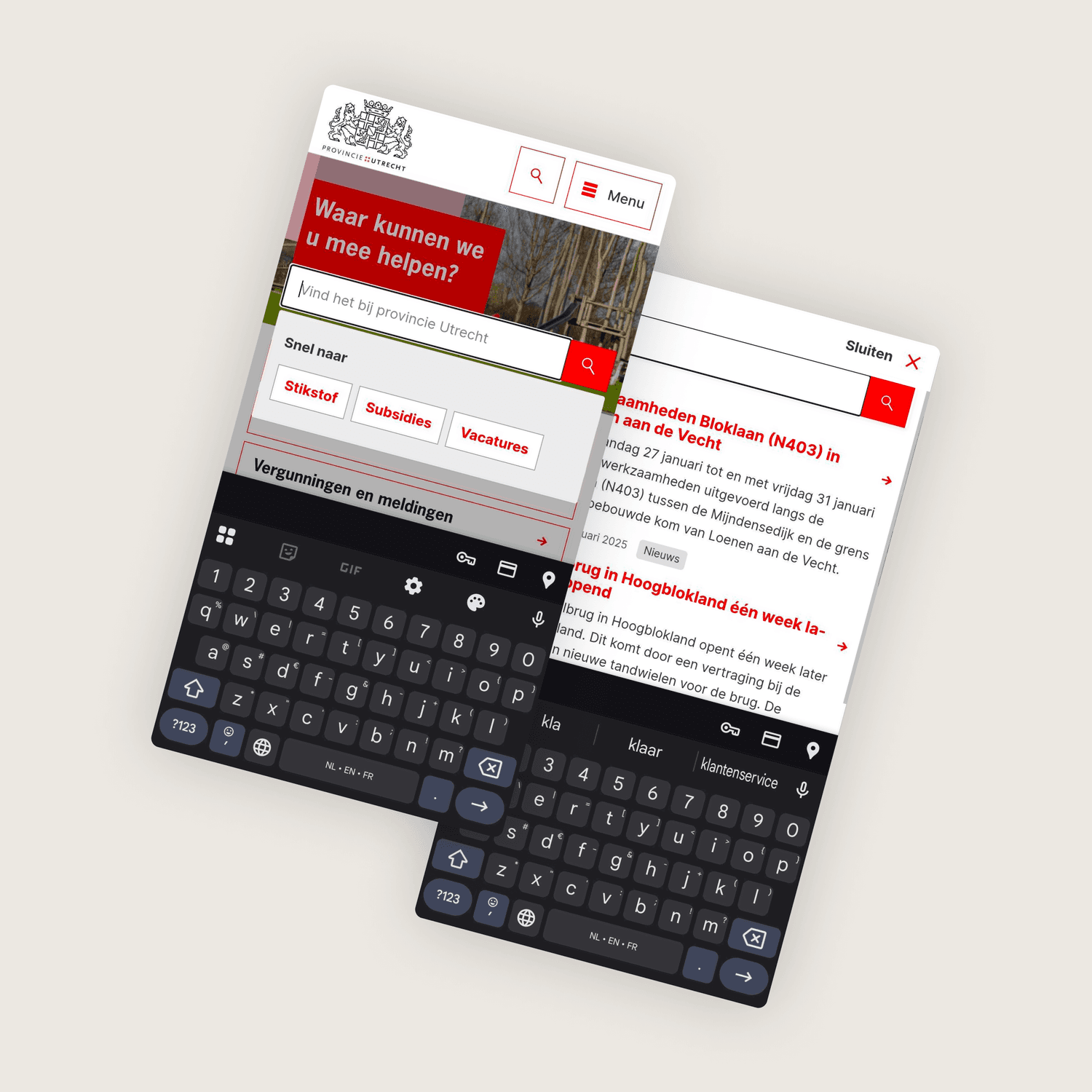
The new platform puts visitors first. An advanced search function helps residents find the information and services they need quickly. The consistent look and feel across all subsites means visitors always know they are on official provincial channels. And the underlying architecture ensures fast, reliable performance even during peak traffic.
The numbers
1
Codebase powering all provincial websites
1day
Time to deploy a new fully functional subsite
1
Single sign-on for access to all sites and the image bank
1%
Updates and optimisations applied across all sites simultaneously
From fragmented websites to a unified government platform
The Drupal multisite architecture transforms how Province of Utrecht manages its digital presence. What used to require separate projects, separate budgets and separate maintenance now operates as a single, coherent platform.
For the province's digital team, the impact is immediate: less time on technical overhead, more time on content that serves residents. For citizens, the impact is a consistent, accessible experience across all provincial websites. And for the organisation, the impact is a scalable foundation that can grow with new initiatives without multiplying complexity.
When a new project needs a web presence, it launches within a day. When security updates are released, they protect all sites at once. When accessibility standards evolve, compliance is updated across the board. This is what a modern government digital platform looks like.