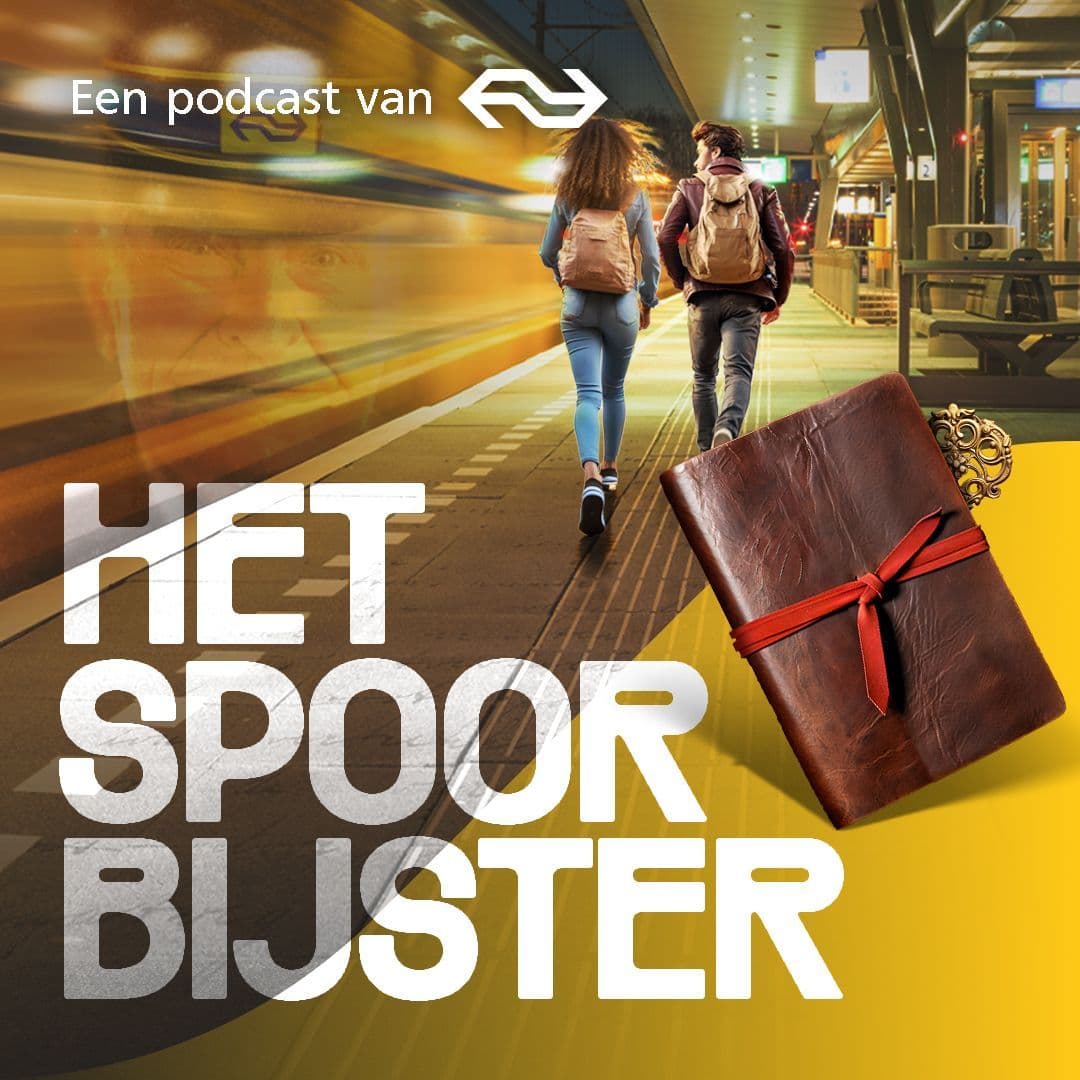
NS wanted to reach young travellers aged 12-18, a generation that plugs in headphones the moment they board. But how do you cut through when everyone's in their own audio bubble? Together, we created Het Spoor Bijster: a fiction podcast that turns train stations into story locations and fellow passengers into potential allies. The result? An award-winning production that proves branded content can genuinely entertain.
Branded podcast production from concept to final mix
Fiction format designed for Gen Z listening behaviour
Six-episode narrative arc across Dutch train stations
Storytelling that reinforces human connection
Lovie Award winner 2024

The challenge
Engage the younger generation and connect with young travellers through the very medium they're already using: podcasts.
The solution
We developed Het Spoor Bijster, a fiction podcast with a mystery narrative that transforms the train journey into an interactive adventure.
NS x iO: storytelling that moves with the passenger
NS (Nederlandse Spoorwegen) is the principal railway operator in the Netherlands, transporting over 1.3 million passengers daily. As a partner, we help NS explore new ways to connect with travellers beyond timetables and tickets.
This podcast represents one chapter in our creative collaboration. We work together to find formats that fit how people actually experience train travel today, blending transport with entertainment, utility with emotion. Het Spoor Bijster is proof that branded content can be a gift to the audience, not an interruption.
Why fiction works for branded podcast production
Most branded podcasts follow a predictable formula: interviews, thought leadership, product stories. For a younger audience raised on Netflix and Spotify, that approach falls flat. Fiction changes the game entirely.
Het Spoor Bijster follows journalism student Naomi Bijster, who encounters a mysterious stranger at Utrecht Centraal and discovers a cryptic booklet. Together with classmate Olaf, she embarks on a train-bound treasure hunt across the Netherlands. The format invites listeners to become part of the journey, not passive consumers of a brand message.

Turning train stations into story locations
Every episode unfolds at real Dutch railway stations. This isn't product placement; it's world-building. Listeners recognise the places they pass through daily, transforming routine commutes into potential adventures.
The stations become characters in their own right. Their architecture, their crowds, their hidden corners all feed into the mystery. For NS, this creates an emotional connection to infrastructure that's usually invisible to travellers.
A message woven into the narrative
The podcast carries a subtle but powerful theme: in an age of individual audio consumption, human connection still matters. Naomi and Olaf's investigation depends on talking to strangers, noticing fellow passengers, staying alert to the world around them.
This message aligns perfectly with NS's brand values without ever feeling like advertising. The story demonstrates rather than tells, letting listeners draw their own conclusions about the value of looking up from their screens.
Branded podcast production: from concept to Lovie Award
Our team handled the complete production process: concept development, scriptwriting, voice casting, sound design, and distribution strategy. The result was a polished six-episode series that stands alongside commercial podcast productions in quality.
In 2024, Het Spoor Bijster won a Lovie Award, the European recognition for excellence in digital content. This recognition validates the approach: when branded content genuinely entertains, audiences reward it with attention and acclaim.
The numbers
1
Episodes in the complete series
1-18
Target age group in years
1
Lovie Award winner
When branded content becomes a gift
Het Spoor Bijster proves that branded podcast production doesn't have to interrupt; it can genuinely add value to people's journeys. For NS, the podcast creates positive brand associations with a demographic that's notoriously hard to reach through traditional channels. Most importantly, it demonstrates that brands willing to invest in genuine entertainment earn attention rather than buying it.