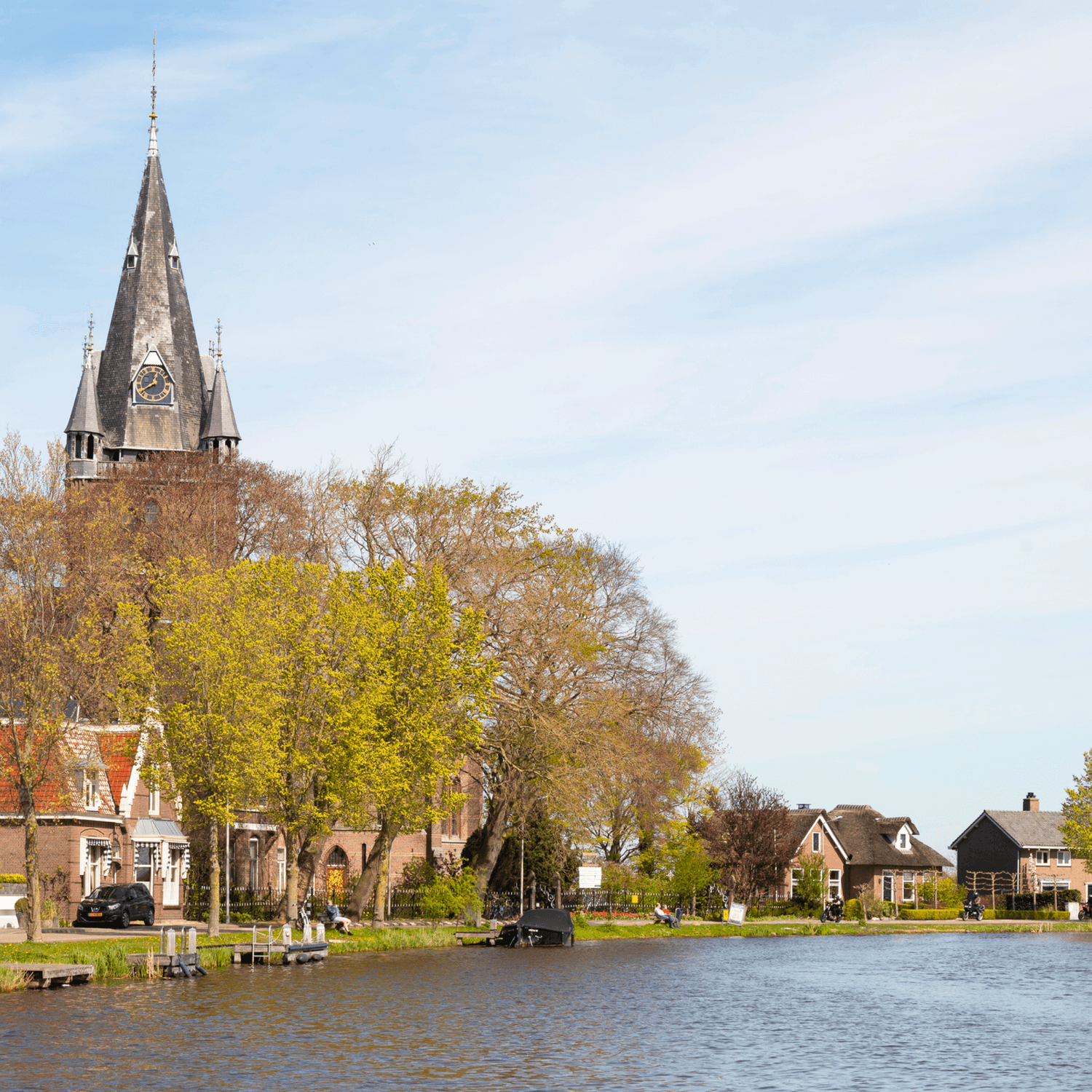
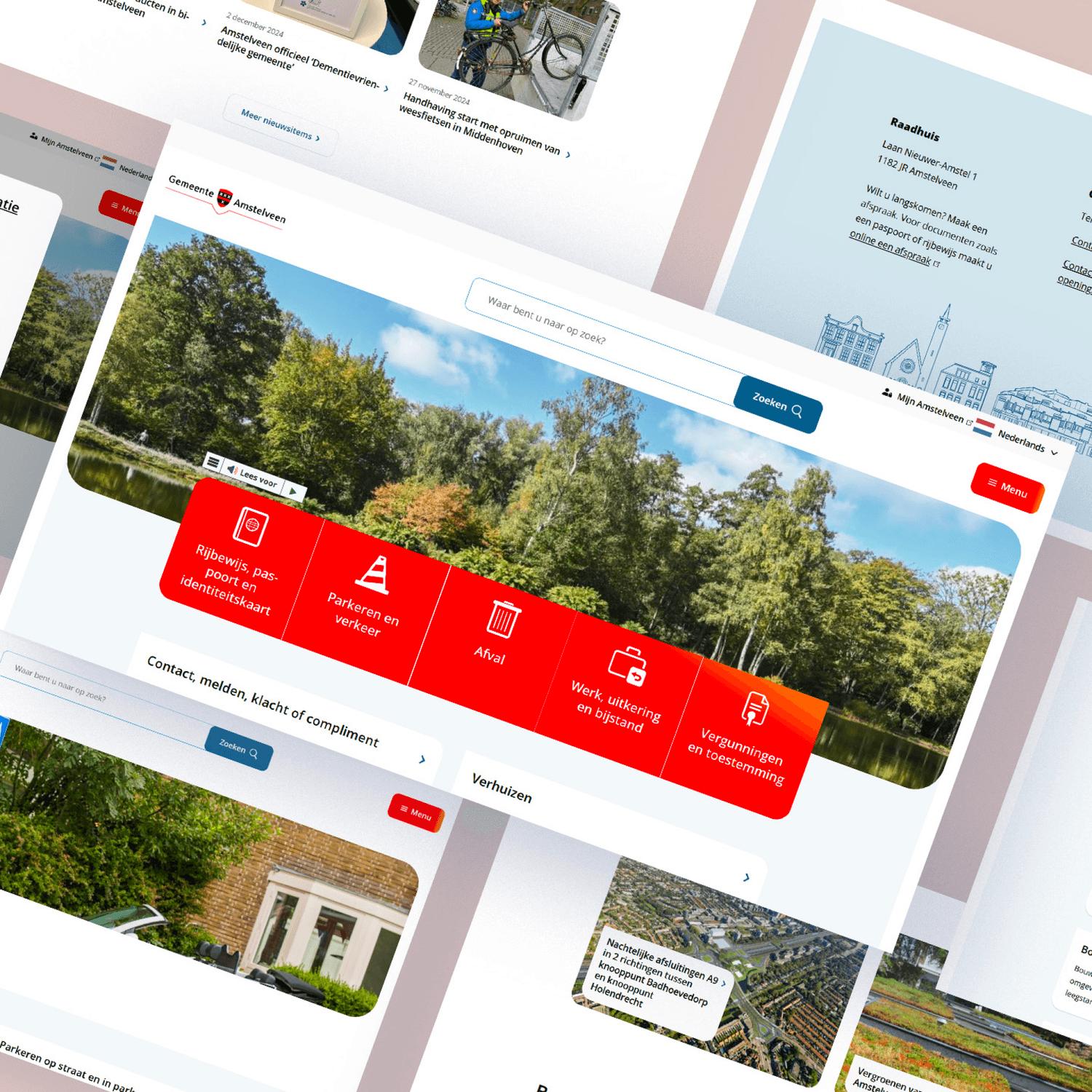
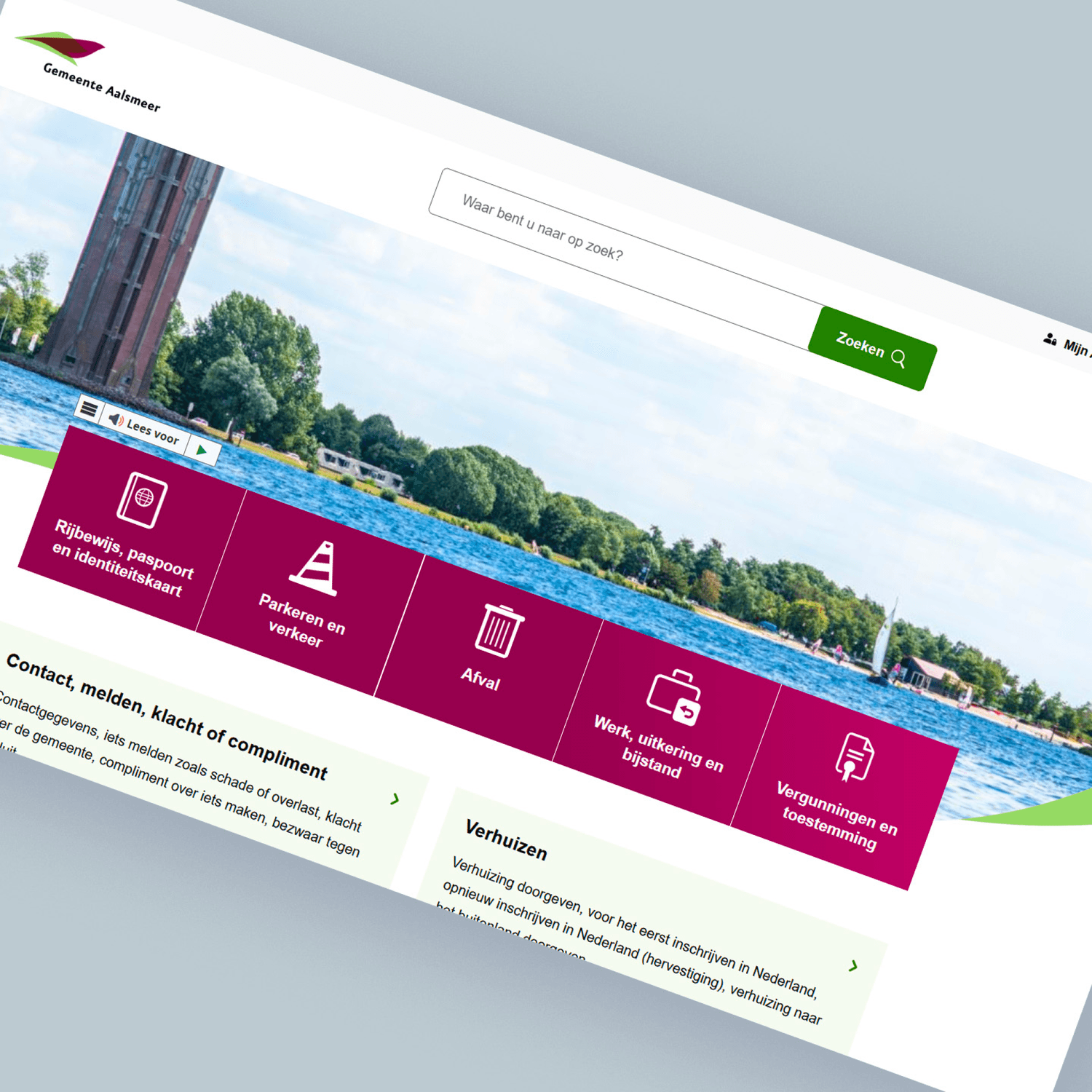
Municipal websites grow organically. Every department adds pages, no one removes them, and residents get lost in a maze of outdated information. For the municipalities of Amstelveen and Aalsmeer, migrating to a new CMS was the perfect moment to restore order. Together, we guided not only the technical transition but restructured all content, rewrote it at B1 reading level, and migrated it to an accessible government platform that truly serves residents.
From 13,000 to 850 pages: radical content simplification
All texts rewritten at B1 reading level for maximum accessibility
Manual migration of 850 pages to Drupal for Governments
Approximately 1,000 redirects implemented to preserve findability
6 months of intensive collaboration with two municipal project teams
The challenge
How do you make a municipal website with 13,000 pages manageable again? Residents searched in vain for information about permits, passports or youth care. Outdated content, unclear structures and overly complex language made the websites inaccessible to a large portion of the 128,000 residents.
The solution
A thorough content inventory, followed by radical simplification. We rewrote all relevant information at B1 reading level, manually migrated 850 optimised pages to the new CMS, and ensured existing links continued working with 1,000 redirects.
Digital services for 128,000 residents
The municipalities of Amstelveen and Aalsmeer are strategically located between Amsterdam and Schiphol Airport. Amstelveen is an enterprising, green and international city; Aalsmeer is known for its flower industry and the combination of urban and rural areas. Together, they serve approximately 128,000 residents, entrepreneurs and visitors.
We supported both municipalities through a crucial digital transformation. Not as an external supplier, but as an extension of their project teams. Four content specialists and a project manager worked side by side with the municipal teams for six months, critically reviewing, rewriting and migrating every single page.
From chaos to structure: why fewer pages deliver more value
A municipal website serves everyone: residents applying for passports, entrepreneurs needing permits, parents seeking youth care. But when information is scattered across thousands of pages, no one finds what they're looking for. The Amstelveen and Aalsmeer websites had grown organically to 13,000 pages, without central oversight on relevance or currency.
The transition to Drupal for Governments was the perfect moment to not only migrate technically, but to reconsider the entire information architecture. Which information is essential? What can go? And how do we ensure residents find what they need in three clicks?
Accessible language: writing at B1 reading level
An accessible government website goes beyond technical accessibility. The language must also be understandable to everyone. That's why we rewrote all content at B1 reading level: clear, concrete and free of bureaucratic jargon.
This wasn't simply about cutting text. Every page was critically assessed: does the resident have all the information to take action? Are the steps logical? Can someone without prior knowledge understand what's written? By continuously coordinating with the information owners within the municipality, we combined factual accuracy with maximum readability.
Ownership as foundation: the content and form owner approach
Content quality depends on clear ownership. The municipalities introduced a model where every page has two owners: an information owner (responsible for factual accuracy) and a form owner (responsible for structure and comprehensibility).
Our content specialists supported the form owners by:
Translating information into clear, user-friendly texts
Performing final editing on already rewritten content
Placing texts in the new CMS with the correct templates
Implementing approximately 1,000 redirects to preserve SEO value
Six months of intensive collaboration
Content migration isn't a technical chore. For six months, we reviewed every page together with the municipal teams. What can be shorter? What's missing? Does the structure match residents' needs?
Thanks to our thorough approach, the optimisation phase was shorter than planned. Customer requests were handled quickly, critical questions were asked and answered. This allowed us to dedicate extra hours to final editing and carefully placing all pages in the CMS.
Renewing websites is a big job, especially if you switch to a new CMS and want to inventory, optimise and migrate all content.
The numbers
13.000 →1
Pages reduced through radical content simplification
±1
Redirects implemented to preserve findability
1
Residents benefiting from better digital services
1
Months of intensive collaboration between iO and municipal teams
Digital services that actually help residents
The result is more than a tidied-up website. Residents of Amstelveen and Aalsmeer now find what they're looking for in just a few clicks, in language everyone understands. The drastic reduction from 13,000 to 850 pages doesn't mean less information, but more relevant information, better structured and easier to maintain.
For the municipal teams, this means less maintenance burden and more focus on content quality. The model with content and form owners ensures the websites remain current and accessible in the future. And for the 128,000 residents? They finally experience a government that's digitally as accessible as it should be.